Most of what’s important for our work wasn’t covered in the onboarding materials. This hidden knowledge often eludes AI, making it less useful than its potential would suggest. Why is that the case, what are AI providers developing to address this problem, and what does this mean for the future of work?
There are some things we’re so good at that we can’t put them into words.
When my daughter took her first steps on her own, she didn’t do it because I had explained it to her:
Push off the floor with both hands, slowly straighten up from your knees, and balance the weight of your body by extending your arms forward. Then put one foot forward, then the other, and off to Mom!

No matter how precise, no matter how often—an explanation alone won’t teach anyone to walk.
But what’s obvious when dealing with children is something we quickly forget in other contexts.
The Hungarian chemist Michael Polanyi sought explanations for why it is often surprisingly unscientific things that make scientific progress possible.
Even in a field as thoroughly documented and rational as science, researchers’ intuition, insights, and feelings are often at least as crucial as the methods we can record in textbooks.
Polanyi summarized his observation in the phrase “We can know more than we can tell” and coined the term tacit knowledge to describe it.
Phrases like “I’m fine,” “I love you,” or “Slowly straighten up from your knees” simply lose most of their meaning on the way from the speaker to the listener.
In other words: Expressing something in words involves a loss of information—language is what software engineers would call a lossy compression medium.
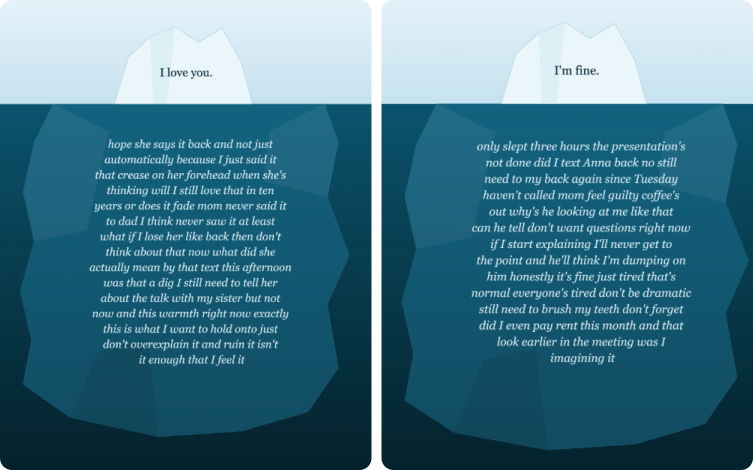
This observation applies much more to some things (expressing feelings, learning to walk) than to others (writing code, multiplying numbers).
Unfortunately (or fortunately, see below), most of what we do falls more into the category of “learning to walk” than “writing code”—and interestingly, this is also the case for software engineers.
The impressive ability of current AI models to write functioning programs in a very short time should—one might think—lead to mass unemployment among software developers. After all, machines can now do what, until recently, only humans could do!
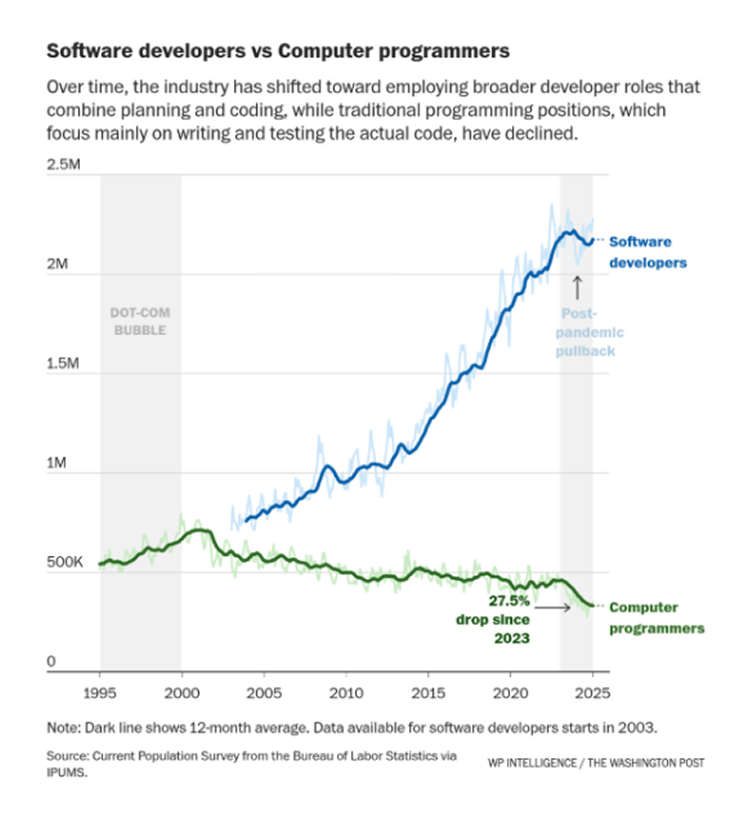
The job market, however, doesn’t seem to have caught on to this yet: While the market for programmers—that is, people who write program code according to specifications—is indeed challenging, software developers continue to fare well, aside from a minor post-COVID correction.
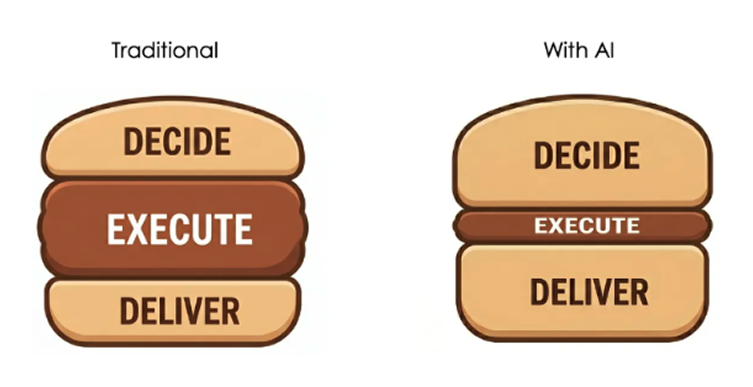
This is likely because software developers, in particular experienced ones, spend only a portion of their time writing lines of code. A great deal of their work consists of coordination, problem definition, planning, and so on—all activities that require an enormous amount of implicit and contextual knowledge.
The execution part—writing program code—is becoming more efficient, which means engineers are now spending more time on the other aspects of their profession.
Difficult and Impossible: A Huge Difference
The question is: Are these tasks fundamentally impossible for AI because they are, in some way, “deeply human”?
Or are they simply difficult—and thus just another technical problem to be solved?
Predictions that this or that task is fundamentally impossible for AI have so far proven rather inaccurate: Not only did it not take a computer “100 years, maybe more” to beat humans at Go, but AI systems are also not incapable of creating music because they lack human emotions, as was often claimed.
However, the “unpredictability” of AI is fascinating: It can perform some tasks in a matter of seconds at the level of a human expert, only to fail at tasks we handle every day.
What Makes Learning So Difficult for AI
Why is that? Why are some things so much harder for an AI to learn than others?
First, slow feedback loops. The same applies to humans: The faster we receive feedback on our behavior, the more effectively we learn from it. However, we’re also able to link actions and reactions even months or years later.
If we say something controversial in a meeting, it may happen that weeks later a colleague thanks us for having courageously raised an important issue at the time. We can learn a lot from this: What we said was valuable—at least to this colleague. But since this colleague didn’t react during the meeting itself, she seems to be reserved when her supervisor—with whom she often disagrees—is in the room.
Often, observations that stretch over weeks and months trigger a whole cascade of important conclusions that we—Tacit Knowledge—cannot or do not put into words.
Second, when “correct” and “incorrect” are not clear-cut. The less a correct answer can be objectively defined, the harder it is for an AI to learn what it’s supposed to do.
This is likely one of the reasons why AI, while it now solves problems that have stumped mathematicians for 80 years, still produces fairly predictable and mediocre texts.
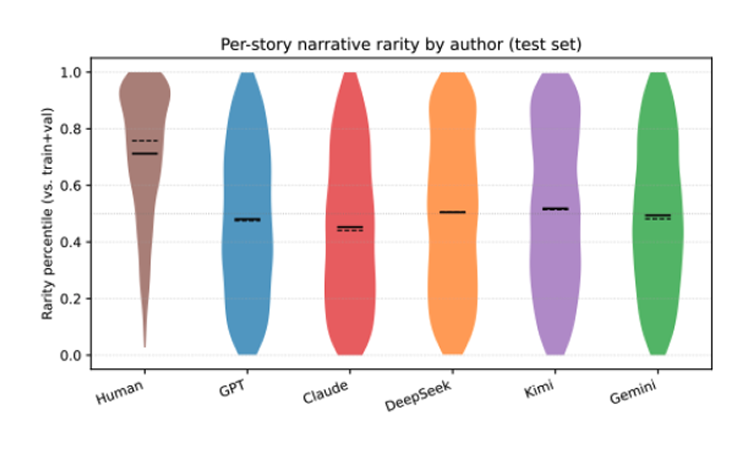
Tasks that can be resolved with an objective “correct” or “incorrect” are called verifiable tasks and are ideally suited for AI.
Unfortunately, our everyday life consists mainly of things we can’t evaluate in this way: Should we speak up in a meeting with senior management? What exactly does “I’m fine” really mean?
We often have the right intuition for these situations, but it doesn’t—tacit knowledge—derive from onboarding materials.
Slow feedback loops and unverifiable tasks are therefore the problems. And they’re essentially addressed with one solution: more data.
Art, for example, was “solved” this way: It’s hard to put into words exactly what makes a “good” painting. So we feed AI models billions of images and have people evaluate the images the AI generates. Images aren’t “right” or “wrong,” but the subjective evaluations of many people serve as a strong signal to the AI about which images are “good” and which are “bad.”
And an AI with access to all our communications could actually learn what the consequences were when we criticized the CEO in that meeting. But what makes learning even more difficult here is that the meeting took place only once. We’ll never know what would have happened if we’d remained silent.
Above all, however—and this is the third obstacle on the path to Tacit Knowledge—a great deal of important information isn’t written down anywhere in the first place.
It’s in your head
It lives in people’s minds, in traditions, habits, and social networks. In some cultures, this is even more true than in ours, as this description of life in India shows:
Many of the basic facts needed to operate in Indian society are not recorded anywhere, but rather sit inside the heads of various information brokers who live off the rents from keeping that information private. Plenty of businesses survive despite being inefficient because one guy has the right contacts with regulators and suppliers.
I met one such information broker in a small town in (Uttar Pradesh)–he was young, persistent, knew English and basically ensured less sophisticated people in the town actually got access to government services and permits. “All have my number, and I have all numbers,” he said in between fielding calls with common people and officials the entire time we spoke.
A great deal of extremely important information will never find its way, neatly organized, into a skills.md file.
Making the Invisible Visible
But perhaps that won’t be necessary for much longer: The integration of AI agents into our daily workflows could close feedback loops and generate sufficient data.
You can see what this looks like in practice with Claude Tag, which Anthropic released in June of this year:
You can message Claude Tag in Slack—just like you would a coworker. Claude can read Slack messages in other channels, access files, and independently take on tasks ranging from research to programming—nothing that an AI model can’t already do.
But instead of just giving the AI the information that we consider important, we’re now dealing with an instance available to all employees that reads along on its own and draws conclusions. In the future, it might be able to independently determine how people reacted to a criticism of the CEO from two weeks ago.
This also sets it apart from AI assistants, such as those typically integrated into Slack or Teams—these are specialized for specific tasks and are provided with curated information.
Will we all be out of a job now?
What does this mean for the future?
First, the more “legible” an organization is, the more it will be able to utilize AI in this form. Distributed teams that communicate via Slack and whose virtual meetings are transcribed produce a great deal of legible information. However, the more important matters are discussed over a beer after work and through private networks, the more Claude Tag will continue to be overwhelmed. This may also apply—as seen in India—at the level of entire economies.
Second, we shouldn’t rest on the assumption that AI won’t be able to do certain things in principle. While even the next, even more intelligent AI model won’t crack the tacit knowledge problem—because intelligence itself isn’t the bottleneck—this is primarily a matter of integration into workflows and the quality of available data, not one of the unique, mysterious properties of the human brain.
Third, companies will increasingly stop booking AI expenses under IT budgets—and will instead focus more on personnel costs. That does not mean we’ll all be out of work soon—the labor market is much more complex than that. But is an agent that researches, programs, and writes texts really just a competitor to Excel?
Fourth, AI providers are trying to create dependencies. Currently, it’s easy to switch from one model to another: the latest model’s current edge is usually quite irrelevant for everyday use, and switching from GPT to Claude involves a manageable amount of effort anyway. But an employee who has built up tacit knowledge within the company over the years is hard to replace.
And when Claude gathers knowledge through deep integration into communication and processes within a “black box,” it resembles the irreplaceable employee more than the interchangeable chat window.
It’s up to us to decide how much we want to make AI an irreplaceable employee—and exactly how we teach that employee to walk.

