2025 was the year of experimentation — 2026 will be the year of contrasts. In my content team at Masterplan, AI really shook things up this year — and judging by what I see on LinkedIn and beyond, we weren’t alone. We played with a range of LLMs, made stock photos obsolete, and effortlessly translated videos into multiple languages. Now we’re hungry for more. The idea of simply pressing a button and instantly getting the perfect personalized learning video is incredibly tempting. Maybe even within reach…?
We’re right in the eye of a whirlwind of seemingly unlimited possibilities — some of which are actually less unlimited than we’d like to believe.
But here’s one thing we absolutely do not want: AI‑generated garbage content — think spam in video and image form. Low‑value, mass‑produced AI output that offers little real benefit. Digital junk that clutters the internet and definitely should not spill over into learning experiences.
So the question becomes: Where can we get the most out of these new capabilities — and where should we purposefully hold back? I’m convinced that in 2026 we’ll wrestle with five highly contrasting trends. Come walk the fine line between AI genius and sheer madness with me!
Trend 1: AI Avatars – Between Efficiency and Trust
Brave new world: Tonight on the nightly news, Caren Miosga will read the headlines — even though she’s actually on vacation in Mallorca. How is that possible? Her AI avatar, trained on years of archived footage.
What many news fans in Germany might chuckle at as sci‑fi is already reality in South Korea. The broadcaster MBN has been replacing a well‑known anchor with her AI twin for years when she’s unavailable.
From Gimmick to Billion-Dollar Market
And this isn’t just a gimmick — the numbers back it up: the AI avatars / digital humans market is projected to grow into the hundreds of billions by 2031.
If it makes sense in media, why not use them in internal communications and learning? Suddenly that dry onboarding deck could be a personalized video from your CEO.
Many companies already are experimenting. In one pilot, switching from slide decks to avatar videos increased onboarding completion rates by 35%.
AI Avatars – Personal or Just Pretend?
Zoom’s CEO Eric Yuan used his AI avatar to deliver opening remarks on earnings calls. Another executive, Steve Rafferty, even used his avatar to open quarterly meetings in French — despite not speaking the language himself.
A CEO video in your native language feels more personal — but only if there’s a real person behind it. So the big question remains: Does it still matter if it’s only an AI version of my CEO?
My verdict for 2026
Yes and no. AI avatars are technically impressive and economically sensible — but emotionally complicated.
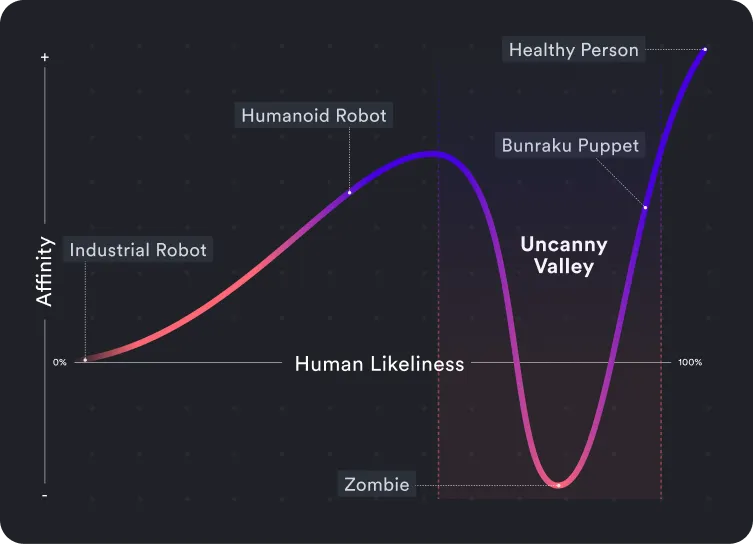
The issue isn’t that we dislike watching avatars — they’re so realistic the old Uncanny Valley effect is fading. But people follow leaders they believe in, not just voices that sound like them.
A few years ago, “the internet” collectively decided that Will Smith eating spaghetti was the gold standard for weird AI videos.
But when you compare what that looked like in 2023 to what’s possible now — just two years later — it’s clear how far things have come.
So does it even matter anymore whether a learning video is delivered by a real expert or an AI avatar?
When Only the Real Human Will Do
Yes. People follow leaders and subject-matter experts they believe in — not just voices that sound like them.
If your CEO can’t carve out 90 seconds to record a video — what does that say about priorities? Just because something is possible doesn’t mean it should be done.
We’ll need to decide case by case when the real human is necessary and when the AI double will do.
AI Avatars in L&D – My Tips for 2026:
<br></br>
<br></br>
<ul>
<li>Ditch text jungles: Replace long PDFs with avatar videos. When learners can choose between reading and watching — videos will win in 2026.</li>
<li>Be personalized, not generic: Use avatars to enhance content — e.g., an avatar of your privacy officer can contextualize general training for your specific organization.</li>
<li>Protect your experts: The most valuable resource your SMEs have is their knowledge, not their on‑camera presence. Let them shape the script — let the avatar take the stage.</li>
<li>Invest in writers, not cameras: Avatars make production efficient — but not automatically good. Great storytelling still matters most.</li>
</ul>
Trend 2: Personalization – Between Effectiveness and Data Anxiety
In my daughter’s elementary school, sometimes every child gets a different math homework. Parents are confused: “Wait — what homework do we actually need to do if my kid wrote something different?” You can’t even check WhatsApp because chaos ensues…
Yet from a learning perspective, it makes perfect sense. Kids who are ahead get new challenges; kids still struggling with multiplication get to practice.
It still raises eyebrows.
The same goes for personalization in workplace learning. We don’t like losing control.
But the data is clear: when learning adapts to our level, knowledge retention improves significantly and training time drops — because learners skip what they already know and focus on what they need.
Imagine a sales software update: a veteran doesn’t need the basic 30‑minute intro — AI can tailor content so they go straight to the new features. Less time wasted and less frustration.
My 2026 Prediction
We’ll see far more personalized, adaptive learning — with AI suggesting what to learn next, based on your current knowledge. But only if we solve the data privacy puzzle.
Ideally, personalization would draw on far more than just role and training history — imagine if AI could subtly understand your communication challenges from your digital interactions and suggest courses to help you grow.
The Tech Is Ready — Trust Is Not
Exciting. Complex.
With AI avatars, we use the tech despite authenticity issues. With adaptive learning, we have the tech — but don’t use it enough because of privacy fear.
So in 2026, it’s crucial that L&D leaders and platform providers take data concerns seriously and still unlock personalization’s value.
Personalization in L&D – My Tips for 2026:
<br></br>
<br></br>
<ul>
<li>Microlearning is standard: True personalization requires modular bite‑size content that can be recombined in real time.</li>
<li>Respect data boundaries: Keep learning data in strict silos — AI knows what it needs to help, but that data never flows to HR or management. What happens in the training platform stays in the training platform.</li>
<li>Talk to your employees & works councils early: Frame personalization as a time‑saver, not surveillance. The trade‑off: “You let the AI measure what you already know — and it spares you redundant content.” That shifts the narrative from monitoring risk to less workload.</li>
</ul>
Trend 3: Interactivity in Virtual Spaces
We all know these people — experts on paper: football, golf, biathlon — yet they’ve never played. They’ve memorized knowledge but never applied it.
Practice Beats Talent
To truly learn a skill, you have to do something. Malcolm Gladwell popularized the “10,000 hours” idea: success isn’t about talent but deliberate practice with feedback.
My 2026 Prediction
If corporate learning is going to work, we must push learners to act.
Offline, we already do this: leadership coaches use role‑plays to strengthen communication skills. It works — but it’s not scalable.
When AI Becomes Your Training Partner
Cue AI.
In fields where practice really matters — aviation, surgery — learning has already become much more practical:
AI can analyze a surgeon’s performance against thousands of procedures and give real‑time guidance, anytime, without fatigue. VR‑trained surgeons make far fewer errors.
It probably won’t be VR for most office jobs — hardware is still a barrier — but similar interactive learning will spread.
Interactivity in L&D – My Tips for 2026:
<br></br>
<br></br>
<ul>
<li>Any simulation beats none: Modern tools make it easy to run virtual role‑plays via chat or voice on laptops or phones — don’t wait for fancy hardware.</li>
<li>Move beyond multiple‑choice: Checkboxes prove someone was awake — interactive dialogue proves understanding. Use AI scenarios like Masterplan PACE to simulate real conversations about objections, active listening, and more.</li>
</ul>
{{blog-lp-link-pace-en="/custom-rich-text"}}
Trend 4: Peer Learning & Community
No matter how friendly your AI coach is, learners are still sitting alone in front of their screens.
Learning Alone Doesn’t Work
Loneliness at work is real. One in five employees globally experiences daily workplace loneliness — and remote work makes it worse. That impacts motivation, performance, and learning.
We’re wired to learn socially. It’s not just about facts; it’s about tacit knowledge: how do you really handle a tough customer? When is it okay to bend a rule? You don’t learn that from a database — you learn it by watching, interacting, and exchanging with peers.
My 2026 Outlook
People will realize people matter.
We’ll need to build bridges between tech and human connection, making tacit knowledge visible and shareable.
Peer Learning in L&D – My Tips for 2026:
<br></br>
<br></br>
<ul>
<li>Cohorts, not lone wolves: Stop purely self‑paced learning. Run group learning experiences with clear goals — community boosts completion and connection.</li>
<li>Create campfire moments: Let AI deliver content, and humans deliver context. After digital modules, hold live sessions — virtual or in person — for discussion and reflection.</li>
<li>Leverage champions: If a respected peer models a new tool, that carries more weight than any IT announcement. Person‑to‑person trust is unmatched.</li>
</ul>
Trend 5: Emotions
When we think of learning, we often think rationally — as structured, measurable, logical sequences shaped by schooling.
But real learning is emotional.
The Brain’s Emotional Gatekeeper
Before information even reaches the neocortex — the seat of rational thought and long‑term memory — it hits the brain’s emotional gatekeeper: the amygdala. If the brain labels a stimulus as boring or irrelevant, it doesn’t stick.
Emotional engagement reduces the number of repetitions needed to form strong neural connections. A single “aha” moment can be far more effective than rote drills.
My 2026 Thesis
To grab attention in 2026, learning content must be emotionally engaging — whether powered by AI or not.
Everyday life conditions us to crave emotional engagement — social platforms excel at this. But those same emotional dynamics could be used for deep learning rather than doomscrolling.
Good content makers in 2026 will borrow not just formats from entertainment but emotional mechanics.
Emotions in L&D – My Tips for 2026:
<br></br>
<br></br>
<ul>
<li>Kill the boring intro: No one in 2026 has time for “Hello, I’m X and today we’re talking about fire safety.” Start with a shock, a joke, or a challenge: “80% of people can’t use a fire extinguisher properly — are you one of them?”</li>
<li>Solve real problems: The emotional brain asks: “Will this help me?” If it feels like bureaucracy, it gets ignored. Start with relevance.</li>
<li>Take cues from Netflix & TikTok: Use hooks, quick pacing, and humor. Edutainment isn’t a dirty word — it’s how you get remembered.</li>
</ul>
{{blog-lp-link-content-overview-en="/custom-rich-text"}}
The Bottom Line
Looking at 2026, I see a paradoxical landscape:
We’ll use more AI than ever — and crave human authenticity more than ever.
- Madness lurks where we compress learning into pure efficiency.
- Genius appears where we realize technology is the delivery system — but human engagement is the real meal.
The tools for 2026 are ready. Whether we create cold AI‑slop or inspiring learning journeys won’t be decided by algorithms — it’ll be decided by us. And by our gut.